the platform
One context layer. Four connected systems.
Most tools show you another dashboard. Omnix builds the connective tissue between them, what exists, what changed, who owns it, who needs to know, and what should happen next.
Atlas
“What exists, who owns it, and how is it connected?”
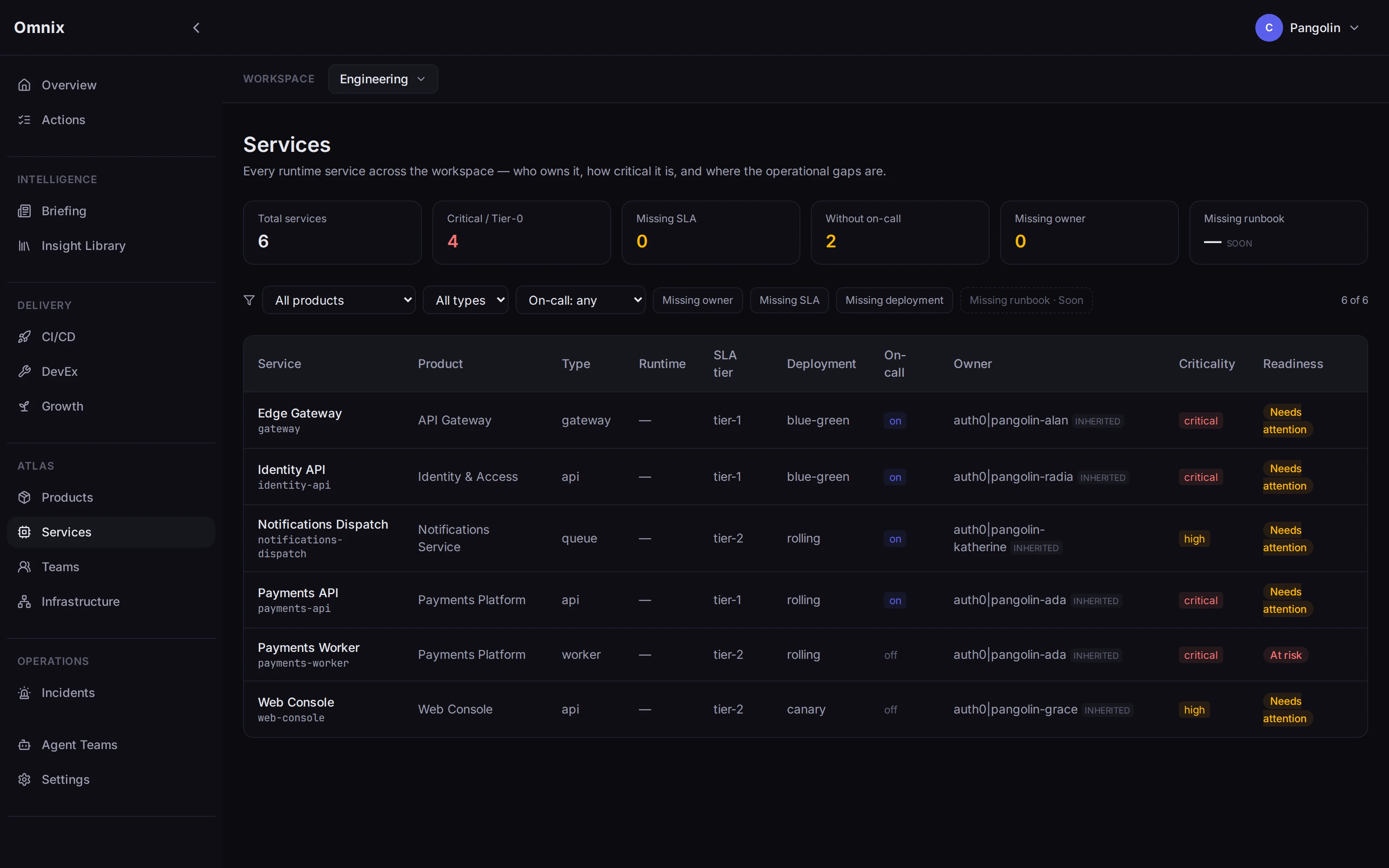
Atlas is the source of truth for your operational estate: products, services, teams, ownership, dependencies, and cloud resources (organised, connected, and kept honest). Every other system in Omnix reasons on top of this graph.
- Service catalogue with criticality, SLA tier, deployment model, and on-call state
- Team directory with org, ownership, comms, and dependency maps
- Ownership gaps surfaced: missing owners, SLAs, runbooks, and on-call rotations
- Cloud resources and infrastructure joined to the services that run on them
payments-api → owned by Team Griffin → depends on Azure SQL → 3 linked incidents
Intelligence
“What is happening, what matters, and why?”
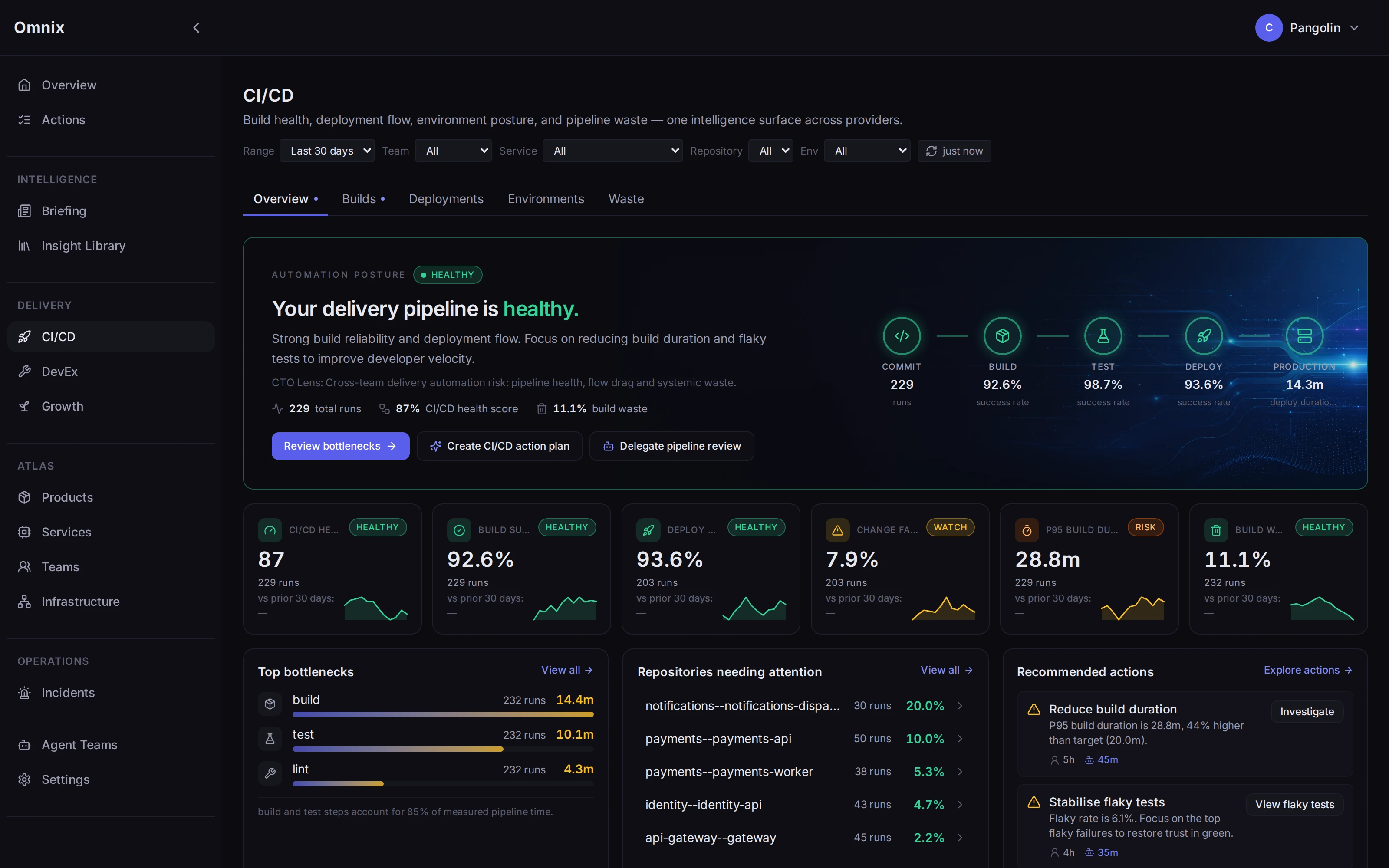
Intelligence reads delivery, reliability, DevEx, deployments, FinOps, and security posture in the context of the graph, then explains what changed and why it matters through the lens of whoever is asking.
- Delivery and pipeline health with bottlenecks ranked by wasted time
- Engineering friction signals: review latency, rework, build waste
- Weekly lens-aware Briefing: what changed, top themes, items to track
- AI summaries that name the owning team and the suggested action, marked for verification, never presented as fact
cost +34% ← ingest workload deployed Tue ← Team Griffin ← no budget tag
Operations
“What needs response, who owns it, and what should happen next?”
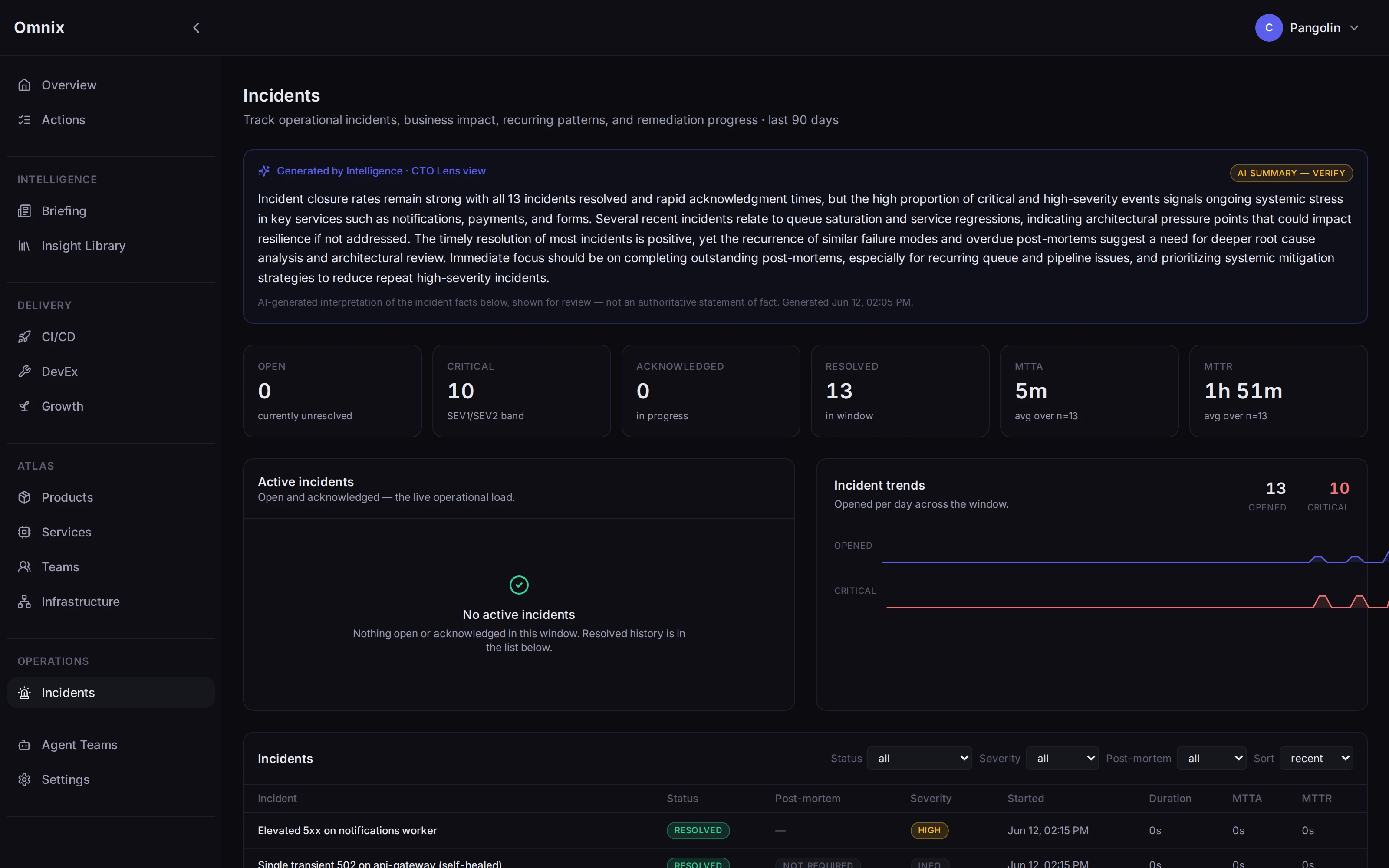
Operations coordinates incidents, post-mortems, runbooks, and response workflows with the context already attached: the owning team, the correlated deployment, the dependency blast radius, and the recurrence history.
- Incidents joined to deployments, services, owners, and past patterns
- MTTA / MTTR tracking with lens-aware AI incident summaries
- Runbooks and post-mortems attached where the response happens
- Recurring-pattern detection: first occurrence, latest, likely cause
INC-208 → notifications-dispatch → Team Minotaur paged → runbook attached
Automation
“What can Omnix do about it?”
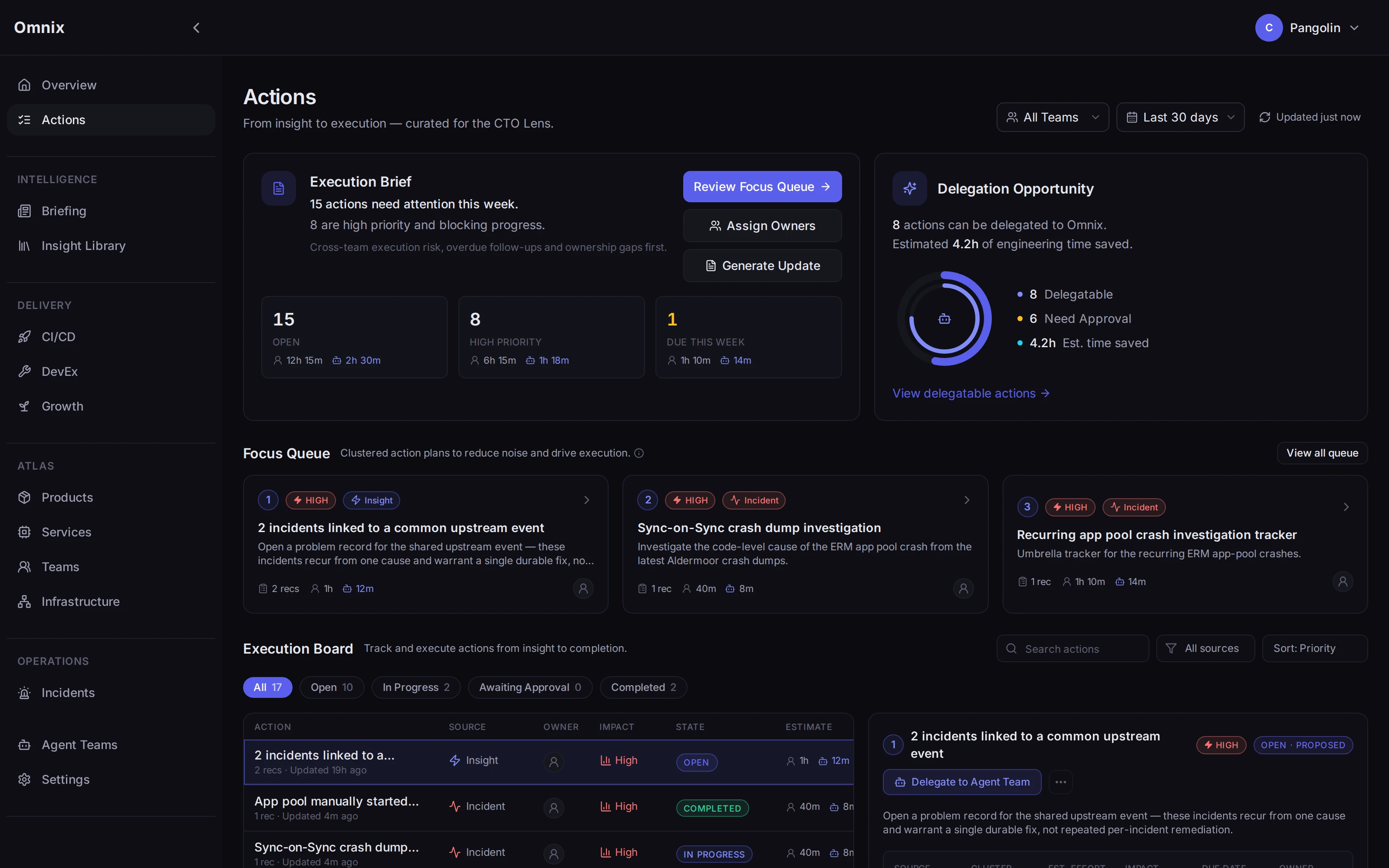
Automation closes the loop from insight to action: briefs drafted, owners notified, tasks opened, workflows triggered, with agent teams that operate inside the same ownership-aware context and governance the rest of Omnix runs on.
- Focus Queue: the actions worth doing this week, with owners attached
- Delegation: actions Omnix can carry through itself, with approval gates
- Lens-aware briefs, notifications, and escalations routed to the right people
- Governed agent teams: scoped permissions, audit trail on every action
cost anomaly → brief drafted → FinOps + owning team notified → action tracked
integrations
Keep your tools. Connect the context.
Omnix doesn't replace your stack. It reads from it. Least-privilege connectors bring signals from code, cloud, incidents, delivery, security, and cost into the graph, without turning your estate into a data free-for-all.
- GitHub
- Azure
- AWS
- Azure DevOps
- Jira
- Datadog
- PagerDuty
- Snyk
- Wiz
- Slack
- Teams
- Cloud billing
Read-only by default · minimum scopes · your code stays in your VCS
Bring your hardest operational question.
See Omnix on your own engineering data.
Bring one operational question: a cost spike, a recurring incident, a delivery slowdown, an ownership gap, or a security concern. We'll show how Omnix connects the dots.